Live blackjack brings the traditional casino table into an online environment by combining real dealers, physical cards, and real-time video streaming. Instead of playing against software-generated cards, players participate in a streamed table where a dealer manages the game while an online interface allows players to place bets and make decisions.
For people searching for live blackjack, understanding the rules, table options, betting decisions, and differences between live and automated blackjack is more useful than simply choosing a table based on appearance or promotions. The rules can vary considerably between games, so checking the details before placing a wager is an important part of making an informed choice.
What Is Live Blackjack?
Live blackjack is an online version of blackjack conducted by a human dealer in a studio or casino environment. Players connect to the table through a website or mobile interface, watch the cards being dealt, and make decisions such as hitting, standing, doubling, or splitting.
The underlying objective remains the same as conventional blackjack: finish with a hand that beats the dealer’s hand without exceeding 21.
Card values are straightforward. Cards from 2 through 10 normally retain their face value, face cards count as 10, and an ace can count as either 1 or 11 depending on which value benefits the hand without causing a bust. A blackjack generally refers to an ace combined with a 10-value card as the initial two-card hand.
How a Live Blackjack Table Works
The experience generally follows a sequence similar to a physical casino table.
1. Choose a Table
A live casino may offer multiple blackjack tables with different betting limits and rules. Before joining, check the minimum and maximum wagers, blackjack payout, number of decks, dealer rules, splitting restrictions, doubling options, and surrender availability.
These details matter because two tables that look almost identical can have different mathematical characteristics. Live-dealer blackjack rules are not completely standardized across every game.
2. Place Your Bet
Players select their wager before the betting period closes. The interface normally displays the available betting range and the countdown for the current round.
Once betting closes, the dealer begins dealing the cards.
3. Make Your Playing Decision
After the initial cards are dealt, the player can receive available options such as:
- Hit: Take another card.
- Stand: Keep the current hand.
- Double: Increase the original wager, usually in exchange for one additional card.
- Split: Separate a qualifying pair into two hands.
- Surrender: In games that offer it, give up the hand under the applicable rules and recover part of the original wager.
Not every table provides every option, so the specific game rules should always be checked first.
4. Dealer Plays the Hand
After players complete their decisions, the dealer follows the table’s predetermined rules. One important variation is whether the dealer must stand or hit on a soft 17.
The dealer’s procedure can affect the mathematical return of the game, which is why it is worth checking before playing.
Live Blackjack vs. Automated Blackjack
The biggest difference is how the cards are presented and dealt.
| Feature | Live Blackjack | Automated Blackjack |
|---|---|---|
| Dealer | Human dealer | Software |
| Cards | Physical cards in a streamed game | Digitally generated or simulated |
| Interaction | Real-time table interface | Software interface |
| Pace | Controlled by live table | Often faster |
| Rules | Vary by table | Vary by game |
| Social atmosphere | Often includes live chat and other players | Usually more solitary |
Neither format should automatically be assumed to have better rules. The actual conditions depend on the individual game.
Live blackjack is particularly appealing to people who prefer the atmosphere of a traditional table and want to watch a dealer handle physical cards.
Important Rules to Check Before Playing
Understanding the advertised table rules can be more valuable than focusing on the visual presentation of a game.
Blackjack Payout
Check how a natural blackjack is paid. A common traditional payout is 3:2, although other payout structures exist. A lower blackjack payout can substantially change the mathematical characteristics of a game.
Dealer’s Soft 17 Rule
A soft 17 is a hand containing an ace counted as 11 that totals 17. Some tables require the dealer to stand, while others require the dealer to hit.
This is one of several rule variations that can affect the house advantage.
Number of Decks
Live games commonly use multiple decks. The number can differ between tables, so it should be checked in the game’s rules rather than assumed.
Double After Split
Some tables permit players to double their wager after splitting a pair, while others restrict the option. This is another rule that can influence the overall mathematics of a blackjack game.
Dealer Peek or No-Peek Rules
Some blackjack formats allow the dealer to check for a blackjack before players make certain additional wagers. Other versions use a no-hole-card or no-peek structure.
This distinction can be particularly important when considering a double or split against a dealer showing a 10-value card or ace.
Basic Strategy Matters
Blackjack is different from games where every decision has exactly the same mathematical expectation. The player’s decision can affect the expected outcome of a hand.
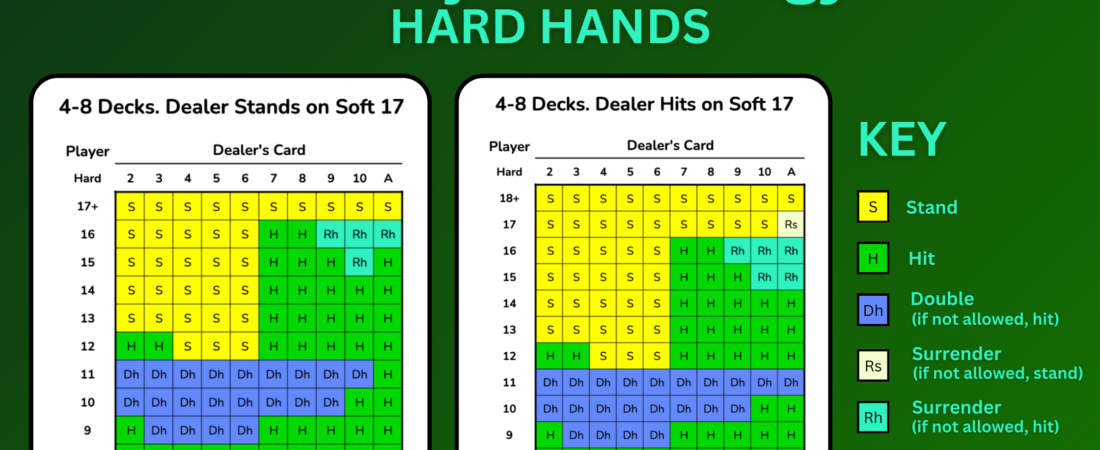
Basic strategy provides mathematically derived decisions for different player hands and dealer up-cards. For example, the appropriate decision can change depending on whether the player has a hard total, soft total, or pair.
However, basic strategy does not guarantee winning. It is designed to reduce decision-making errors under a particular set of rules. Because tables can use different rules, a strategy chart should match the relevant version of the game.
Side Bets Deserve Extra Attention
Live blackjack tables may offer optional side bets alongside the main blackjack wager. Examples can include bets based on pairs, particular card combinations, or other events.
These wagers are separate from the basic blackjack game and can have substantially different mathematical characteristics. For that reason, players should not assume that an attractive-looking side bet has the same risk profile as the main wager.
If the rules or payout table are unclear, the safest approach is to understand them fully before placing the wager.
A Simple Example of a Blackjack Round
Imagine a player receives a 10 and a 6, giving a total of 16. The dealer’s visible card is a 6.
The player now has to make a decision according to the applicable rules and basic strategy for that specific table. If the player chooses to hit, another card is dealt. If the new card takes the total above 21, the hand busts.
If the player stands, the dealer completes the hand according to the table’s rules. The final totals are then compared, assuming neither side has already determined the outcome.
This example demonstrates why blackjack is not simply about trying to get as close to 21 as possible. The actual objective is to beat the dealer while avoiding a bust.
Responsible Ways to Approach Live Blackjack
Because blackjack involves real-money wagering, setting boundaries before playing is important.
Decide how much money and time you are prepared to spend before starting. Avoid treating gambling as a guaranteed way to make income, and do not increase wagers simply to recover previous losses.
It is also sensible to understand the gambling laws and licensing requirements applicable to your location. Online gambling rules differ between jurisdictions, and availability does not necessarily mean a particular service is legally available everywhere.
If gambling stops being an entertainment activity and starts creating financial, emotional, or personal difficulties, taking a break and seeking appropriate support is more important than continuing to play.
What Makes a Live Blackjack Table Worth Considering?
Rather than judging a table by its branding or promotional language, examine its actual rules.
A useful checklist includes:
- What is the minimum and maximum wager?
- What does blackjack pay?
- Does the dealer hit or stand on soft 17?
- How many decks are used?
- Is double after split permitted?
- Are re-splits allowed?
- Is surrender available?
- What happens if the dealer has blackjack?
- Are side bets offered, and what are their payouts?
- Are the applicable terms and conditions clearly displayed?
Comparing these details gives a much clearer picture of a table than looking only at its interface or promotional offer.
Read More: Best Gambling Sites: What to Look For
Final Thoughts
Live blackjack combines traditional casino gameplay with the convenience of online access. The presence of a real dealer, physical cards, streamed gameplay, and interactive betting can make the experience feel closer to a conventional casino table than automated blackjack.
However, the quality of a particular game depends heavily on its rules and conditions. Blackjack payouts, dealer procedures, deck numbers, doubling restrictions, splitting rules, and side bets can all differ.
For anyone exploring live blackjack, the most practical approach is to understand the table rules first, learn the basic mechanics of the game, use appropriate strategy for the specific rule set, and treat wagering as entertainment rather than a guaranteed source of income.
FAQs
Is live blackjack played with a real dealer?
Yes. Live blackjack normally uses a human dealer who handles physical cards while the game is streamed to online players in real time.
Can I play live blackjack on a phone?
Many online casino platforms offer mobile-compatible live dealer games. Availability depends on the operator, game, device, and applicable jurisdiction.
Are live blackjack rules always the same?
No. Rules can vary between tables. Important differences may include the blackjack payout, number of decks, dealer behavior on soft 17, surrender, splitting, doubling, and whether the dealer checks for blackjack.
Does basic strategy guarantee a win?
No. Basic strategy provides mathematically appropriate decisions for particular blackjack situations, but individual hands remain uncertain and winning is not guaranteed.
What is the difference between live blackjack and online blackjack?
Live blackjack uses a human dealer and physical cards streamed online. Automated blackjack uses software to conduct the game. Both formats can have different rules and betting conditions.
Should players use blackjack side bets?
Side bets are optional and have their own payout structures and mathematical characteristics. Players should understand the exact rules and potential risks before considering any additional wager.